Pick a primary experience
Choose rim scale and measured descent, or a Zion Canyon walk with the access system that supports it.
Regional field guide
Choose a South Rim or Zion Canyon trip by the walking, shuttle, and overnight-base decisions each actually requires.
Compare your optionsFirst decision
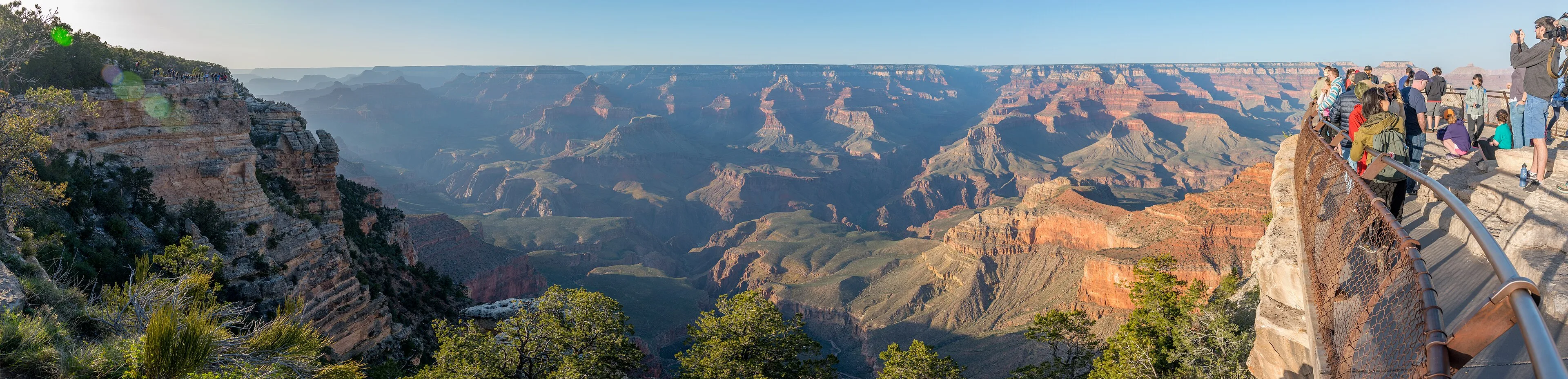
For a first, shorter canyon trip, choose one park and give it more than a drive-through. Grand Canyon is a rim-scale experience with serious below-rim heat and return-climb consequences. Zion is a trail-level canyon experience whose main corridor usually runs on a shuttle system. Both fit one journey only when each has its own base and the transfer has time.
Choose a canyon
Decide what you want to do at the canyon, then work backward through access and the overnight base.
| Choice | Best fit | Plan around |
|---|---|---|
| Grand Canyon South Rim | Rim scale, viewpoints, a rim walk, and a conservative descent | The return climb, heat, and current water status matter immediately below the rim. |
| Zion Canyon | Walking among canyon walls and a compact shuttle-based trail day | Springdale-to-park connection, shuttle season, and hike-specific hazards or permits shape the day. |
| Both parks | Travelers with separate overnights and a genuine transfer day | Do not count the drive between parks as a full hiking day in either. |
Planning order
A few early choices prevent most avoidable backtracking.
Choose rim scale and measured descent, or a Zion Canyon walk with the access system that supports it.
South Rim village, Tusayan, and Williams solve different drive-time problems. Springdale is the practical shuttle-connected Zion base.
Grand Canyon has in-park South Rim buses and a seasonal Tusayan line. Zion links a town shuttle, pedestrian entrance, and canyon shuttle.
Heat, water, flash floods, road conditions, and trail closures can change the day; keep a lower-exposure alternative.
Park guides
These pages cover the park-level experience, hazards, and practical arrival decisions.
A first Grand Canyon trip is mainly a rim choice and effort-management decision. The South Rim is the more dependable first-visit base, while the North Rim is seasonal and more remote; any hike below the rim multiplies heat, elevation, water, and return-climb risk.
Read the park guideZion is a canyon-first trip where the visitor center, Springdale pedestrian entrance, park shuttle, hiking permits, and flash-flood conditions determine what a first day can safely include.
Read the park guideDecision guides
Access, reservations, overnight bases, and pacing each call for a different choice.
Use the South Rim as the default first-visit base unless the North Rim is a deliberate seasonal objective, then build the trip around shuttle mobility and conservative below-rim hiking.
Read the guideChoose a South Rim base by how much dawn, dusk, and shuttle time you need, not by the apparent distance on a booking map.
Read the guideSeparate the Springdale town bus, pedestrian entrance, and Zion Canyon park shuttle before building a first canyon day.
Read the guideCompare a rim-first canyon experience with a shuttle-and-trail canyon day before choosing which park deserves the longer stay.
Read the guideBefore departure
Park bulletins and reservation terms outrank a saved itinerary.
Grand Canyon Heat and Water Checklist